

Wine is one of those parts of the menu that quietly carries a lot of weight. A solid wine program can pull in a serious chunk of revenue for a restaurant or bar, and it tends to do that without taking up much real estate on the menu.
The catch is that all of it depends on storage. A bottle served two degrees too warm, or one that has been sitting in a hot prep area for a week, loses everything that made it worth ordering in the first place.
That is where wine coolers earn their place in the kitchen. They keep the product steady, they keep the guest experience consistent, and they keep an expensive case of cabernet from quietly turning into a write off.
This guide walks through what wine coolers actually are, how they work, and which kind fits the way your operation moves bottles.
What Are Wine Coolers and Why Do Restaurants Need Them?
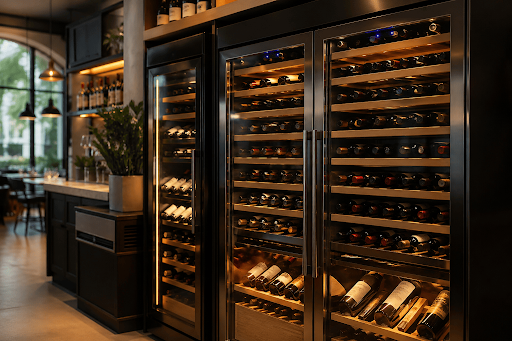
If you have ever wondered what are wine coolers in the context of commercial hospitality, the answer goes beyond a fancy fridge. A wine cooler is a temperature-controlled storage unit designed to hold wine at the precise conditions needed to preserve flavor, aroma, and structure over time.
Standard refrigerators run too cold and too dry for wine, which can dry out corks and dull the taste of your bottles within weeks.
For restaurants and bars, wine coolers are an operational tool. They keep reds in the 55 to 65 degree range, whites between 45 and 50 degrees, and sparkling wines slightly cooler. Without a dedicated unit, your sommelier or bar staff is basically guessing, and your inventory turns into a liability instead of an asset.
How Do Wine Coolers Differ From Regular Refrigerators?
A standard commercial refrigerator is built to hold food safely below 40 degrees Fahrenheit. That temperature is far too low for wine. Cold storage at standard refrigeration levels suppresses aroma compounds and can cause whites to taste flat by the time they reach the table.
Humidity is the second issue. Most refrigerators dehumidify the air to keep food fresh, but wine corks need humidity around 50 to 70 percent to stay tight. Dry corks let oxygen seep in, which oxidizes the wine and ruins the bottle.
Commercial wine coolers are engineered with humidity controls, gentler airflow, and vibration dampening that protect bottles during long-term storage.
What Are the Main Types of Wine Coolers?
When operators ask what wine coolers are available for commercial use, the market really splits into a few clear categories.
- Single-zone coolers maintain one temperature throughout the cabinet. They work well for businesses that focus on one style, such as a steakhouse with a primarily red wine list or a seafood spot serving mostly whites.
- Dual-zone coolers offer two separate compartments with independent temperature controls. This is the standard pick for restaurants serving a mixed menu, since you can hold reds and whites at the right temperatures in the same unit.
- Multi-zone coolers push that concept further with three or more independently controlled sections. These suit higher-end establishments that need to serve sparkling, white, rosé, and red at distinct serving temperatures.
- Built-in versus freestanding is another important distinction. Built-in models vent from the front and slide into cabinetry for a clean look. Freestanding units need clearance on the sides and back, which makes them better for back-of-house storage.
- Undercounter coolers fit beneath bar tops and service stations, perfect for small footprints and quick access during a busy shift.
Which Wine Cooler Size Is Right for Your Business?
Capacity is measured by bottle count, and the right size depends on your service volume, menu, and storage strategy.
A small bistro pouring 30 to 50 bottles a week can usually run on a 50 to 100 bottle unit. A mid-sized restaurant with a developed wine list often needs 150 to 300 bottle capacity, sometimes split across multiple units.
Larger operations such as hotels, banquet halls, and fine dining venues frequently use commercial wine cellars holding 500 bottles or more.
When you size a unit, plan for growth and for the days when deliveries arrive before older inventory has moved. Running a cooler at full capacity all the time stresses the compressor and shortens its lifespan.
What Features Should You Look for in a Commercial Wine Cooler?
Beyond temperature and capacity, several features separate a reliable commercial unit from a cheap residential model that will fail under heavy use.
UV-resistant glass doors protect bottles from light damage, which can degrade wine over time. Forced-air cooling distributes temperature evenly so bottles on the top shelf match those on the bottom. Look for adjustable wooden or metal shelving that fits magnums and oddly shaped bottles, since standard racks limit your buying options.
Lockable doors are essential for restaurants where shrinkage is a concern. Digital temperature displays help managers verify conditions during shift changes. Quiet compressors matter if the unit will sit in or near the dining room. Energy Star certification can reduce monthly utility bills, which adds up across a unit running 24 hours a day.
Build quality matters most of all. Commercial-grade compressors, stainless steel interiors, and heavy-duty hinges are designed to handle the open-and-close cycles of a busy service.
How Much Does a Commercial Wine Cooler Cost to Operate?
The purchase price of a commercial wine cooler ranges widely. A small undercounter unit might run $1,500 to $3,000, while a large dual-zone or multi-zone cabinet can cost $5,000 to $15,000 or more. Custom wine rooms designed for fine dining establishments can climb well beyond that.
Operating costs depend on size, efficiency, and ambient kitchen temperature. A typical commercial cooler uses between 200 and 600 kilowatt-hours per year, which translates to roughly $30 to $90 in electricity annually for a smaller unit.
Maintenance is straightforward: clean the condenser coils every few months, check door seals, and have a technician inspect the system once a year.
Why Proper Wine Storage Is Backed by Science
The case for investing in a quality wine cooler is not just about aesthetics or convenience. It is supported by extensive scientific research.
A peer-reviewed review published in the National Library of Medicine titled “Bottle Aging and Storage of Wines: A Review” confirms that fluctuating temperature is one of the main risks associated with wine spoilage, with a range of 15 to 17 degrees Celsius (roughly 59 to 63 degrees Fahrenheit) recognized as optimal for preservation.
The same research highlights that temperatures above 20 degrees Celsius accelerate oxidative reactions, while inadequate humidity causes cork stoppers to dry, shrink, and let oxygen seep into the bottle. For restaurants and bars, this translates directly into dollars: every bottle stored under poor conditions is a potential loss in flavor, customer satisfaction, and revenue.
A commercial wine cooler is not a luxury purchase; it is the equipment that protects your investment in inventory and keeps your wine program credible in front of paying guests.
Frequently Asked Questions (FAQ)
Can a wine cooler be installed outdoors on a covered patio? Most standard commercial wine coolers are rated for indoor use only. Outdoor-rated models exist but cost more and require weatherproof electrical connections. Always check the manufacturer specifications before installing any unit outside.
How long does it take a wine cooler to reach the correct temperature after installation? A commercial wine cooler typically needs 12 to 24 hours to fully stabilize at the set temperature once you load it with bottles. Avoid stocking the unit until it has reached the target range.
Do wine coolers work for storing other beverages such as craft beer or sake? Yes, many operators use dual-zone coolers to hold sake, craft beer, and even certain liqueurs at ideal serving temperatures. Just be aware that mixing products can affect humidity needs and rotation patterns.
What is the average lifespan of a commercial wine cooler? With proper maintenance, a quality commercial wine cooler should last 10 to 15 years. Compressor quality, usage patterns, and regular cleaning of condenser coils are the biggest factors in longevity.
Are wine coolers loud enough to disturb dining guests? Modern commercial units are designed to operate quietly, often below 45 decibels, similar to a soft conversation. Compressor-based models are louder than thermoelectric units, but built-in installation and proper ventilation reduce noise significantly in dining spaces.
Should You Buy a New or Used Commercial Wine Cooler?
Now that we have answered what wine coolers are and reviewed the main options, the next question is how to acquire one. For most hospitality businesses, the decision comes down to choosing between a new or used commercial wine cooler.
Buying a new commercial wine cooler makes sense for operations that want the latest technology, maximum energy efficiency, and full manufacturer warranty coverage. New units are ideal for new restaurant openings, upscale venues, or businesses that need reliable performance and a long service life from day one.
If your priority is durability, modern design, and peace of mind, explore our selection of new commercial bar coolers.
Purchasing a used commercial wine cooler can be a smart, cost-effective solution for growing restaurants, bars, and hospitality businesses that want to control upfront expenses without sacrificing functionality.
Professionally inspected and refurbished units deliver dependable performance at a lower price point, making them a practical option for expanding operations or adding storage capacity quickly. If you’re looking to maximize value while staying within budget, browse our inventory of used commercial wine coolers.
For many businesses, the right choice depends on budget, timeline, and operational needs. Whether you are opening a new location, upgrading your beverage program, or replacing aging equipment, our team can help you compare models that fit your menu, footprint, and budget.If you want help selecting the right unit for your space, request a quote and our specialists will guide you through the best options available.