

Commercial kitchens often choose between a convection oven and a combi oven based on menu needs, volume, and budget. Convection ovens are simpler and cheaper, while combi ovens add steam and far more cooking flexibility, but at a much higher price point.
How Technology Differs
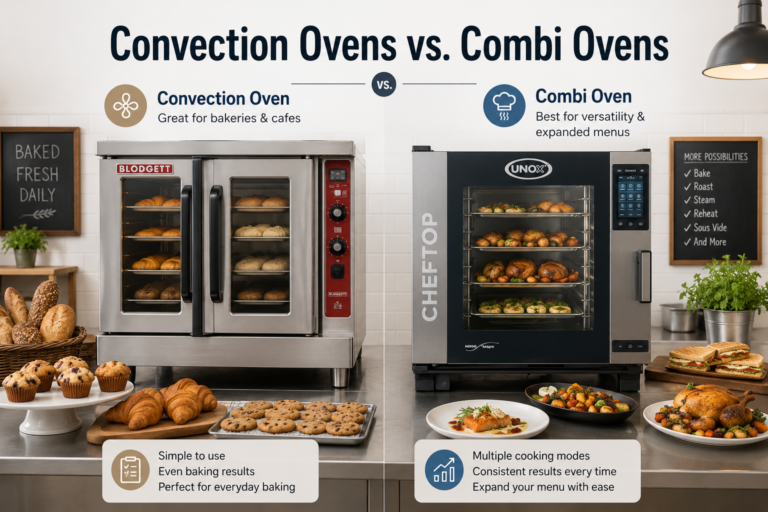
A convection oven uses fans to circulate hot, dry air around the food, which helps reduce hot spots and promotes even browning. That makes it especially good for baking, roasting, crisping, and reheating items that benefit from a dry finish.
A combi oven does everything a convection oven can do but also adds steam and combination cooking modes with humidity control. That extra moisture control helps preserve tenderness, reduce shrinkage, and expand the menu to include steamed vegetables, poached fish, braised dishes, and more delicate baked goods.
Best Uses For Each
Convection ovens are best when the kitchen needs a dependable workhorse for bread, pastries, sheet-pan items, roasted meats, vegetables, and foods that should brown well. They are also easier to operate, require less infrastructure, and are a strong fit for bakeries, cafés, smaller restaurants, and operations with straightforward oven menus. See our selection of Convection Ovens.
Combi ovens shine in kitchens that want maximum versatility and tighter control over food texture and moisture. They are especially useful for hotels, caterers, banquet operations, institutional kitchens, and restaurants that cook a wide variety of proteins, vegetables, baked items, and retherm products in one appliance. Browse our selection of Combi Ovens.
Cost Range
A commercial convection oven is generally the more affordable option, with many models landing in the roughly $2,500 to $5,000+ range depending on size, configuration, and brand, though higher-capacity units can cost more. In practical terms, convection ovens are often chosen because they deliver solid performance without a major capital investment.
Combi ovens cost significantly more because they combine multiple cooking technologies and usually include advanced controls, plumbing, and cleaning systems. Entry-level combi ovens can start around $5,000, mid-range units are often $15,000 to $35,000, and high-end systems can reach $35,000 or more. Some market guides also place mid-range combi units roughly in the $15,000 to $25,000 range when matched by tray capacity to convection ovens.
Which One Is Better?
If the menu is mostly baking, roasting, and crisping, a convection oven is usually the better value. It costs less, is easier to maintain, and does the core job well for many kitchens.
If the operation needs steam, humidity control, better moisture retention, and one machine that can replace several pieces of equipment, the combi oven is the stronger long-term investment. The higher upfront cost can be justified by menu flexibility, labor savings, and reduced food waste in high-use kitchens.
In Summary
For a clean, practical kitchen, the right oven depends less on the brand and more on how the menu actually works. Convection ovens are the simpler, lower-cost choice for dry-heat cooking, while combi ovens are the premium option for operations that need both precision and versatility. A good rule of thumb is this: choose convection when you want reliable baking and roasting at a lower price and choose combi when you want one appliance that can do the work of several.
Reach out to American Energy Restaurant Equipment today find the right oven for the job. Call us at 703-644-6666 to speak with our experienced sales team.