
Commercial Dishwasher: Lease or Buy?
Every operator opening a kitchen or replacing an aging machine eventually faces the same decision: should you lease or buy a commercial dishwasher?
Both options get the job done, but they come with very different costs, risk profiles, and maintenance responsibilities. The right choice depends on your budget, cash flow, and how much downtime you’re willing to handle when the machine breaks.
There’s no universal right answer here, but there is a right answer for your specific operation. Here’s what actually separates the two options, with real numbers instead of vague pros and cons.
The Upfront Cost Difference
Buying a commercial dishwasher outright typically runs anywhere from $5,000 for a basic undercounter unit to $25,000 or more for a high-volume conveyor system, paid in full or financed before the machine ever washes a dish.
Leasing flips that structure. Instead of a large upfront payment, you’re looking at a monthly rate, often somewhere in the $180 to $1,200 range depending on machine size and what’s included in the service agreement.
For a new restaurant already stretching capital across a build-out, that difference between one large payment and a predictable monthly one is often the deciding factor before any other consideration even comes into play.
What You’re Actually Responsible for After the Purchase
This is where the two paths really start to diverge, and it’s the part that gets underestimated most often.
When You Buy
Once you own the machine, everything that happens to it is your problem. That includes:
- Routine maintenance, deliming, and cleaning supplies
- Repair calls, parts, and labor when something breaks
- Finding a technician, sometimes with a multi-day wait, and then another delay to get the parts
- The full replacement cost when the unit eventually fails for good
Extended warranties can offset some of this, but they add cost back into the equation and rarely cover everything, particularly wear parts like pumps, spray arms, and heating elements that fail through normal use.
When You Lease Through a Full-Service Provider
A lease that includes service, like our dishwasher leasing program, shifts most of that burden off your plate. Maintenance, repairs, and parts are built into the monthly rate, and a breakdown becomes the leasing company’s problem to solve fast rather than yours to solve eventually. AERE guarantees Service by Your Next Meal.
That matters most for the two pieces of equipment most likely to fail in a working kitchen: the dishwasher and the ice machine. When either goes down mid-service, the cost isn’t just the repair. It’s the rewashed dishes, the slowed line, and the shift that runs behind for the rest of the night. AERE not only services your ice machine, we also provide ice when the machine is down.
QUICK TIP
When comparing a lease quote to a purchase price, always ask exactly what’s included in the monthly rate. “Includes service” can mean anything from full parts-and-labor coverage to a phone number you call and pay for separately.
Total Cost of Ownership Over Time
The sticker price is only half the comparison. Total cost of ownership adds up everything a machine costs across the years you actually use it, and it changes the math more than most operators expect.
A purchased dishwasher, factoring in the initial cost, average annual maintenance, a couple of repair calls, and eventual replacement, often runs somewhere close to what an equivalent lease costs over the same period, once you add it all up honestly.
The difference is where the risk sits. With a purchase, an expensive repair or early failure lands entirely on you in whatever month it happens. With a lease, that risk is smoothed into a monthly rate you can actually budget around.
For an operation with tight, unpredictable cash flow, that predictability alone can be worth more than a marginally lower total cost on paper.
The Tax Angle Worth Knowing
Buying equipment outright, whether with cash or financing, can qualify for accelerated depreciation under Section 179 of the federal tax code, which lets a business deduct the full cost of qualifying equipment in the year it’s placed in service rather than spreading it out over several years. The IRS explains the mechanics of Section 179 here.
Lease payments, on the other hand, are typically deductible as an ordinary business expense as they’re paid, which is simpler but spreads the tax benefit out over time instead of front-loading it. Which structure works better depends on your specific tax situation in a given year, and this is genuinely a conversation for your accountant, not something to decide off a blog post.
When Buying Makes More Sense
- You have the capital available and would rather own the asset outright than carry a recurring monthly cost.
- Your kitchen has in-house maintenance capability or a reliable local repair relationship already in place.
- You want the equipment on your balance sheet, often relevant if you’re planning to sell the business down the line.
- You’re confident in your ability to absorb an unexpected repair cost without it disrupting cash flow.
When Leasing Makes More Sense
- You’re opening a new location and want to preserve capital for build-out, staffing, and inventory instead of equipment.
- You don’t have in-house technical staff and don’t want to be the one hunting down a repair technician mid-rush.
- Predictable monthly costs matter more to you than the lowest possible total spend on paper.
- You want a guaranteed response time if the machine goes down, rather than whatever a general repair shop can offer that week.
A Question Worth Asking Before You Decide
Ask yourself what actually happens at your operation if the dishwasher fails on a Friday night. If the answer involves scrambling to find a technician, waiting days for a part, and running dishes by hand in the meantime, that scenario alone is worth pricing into the decision, whether or not you ever hit it.
That’s the real value a service-included lease is selling: not just a machine, but a guaranteed answer to that Friday night scenario.
A Real-World Example
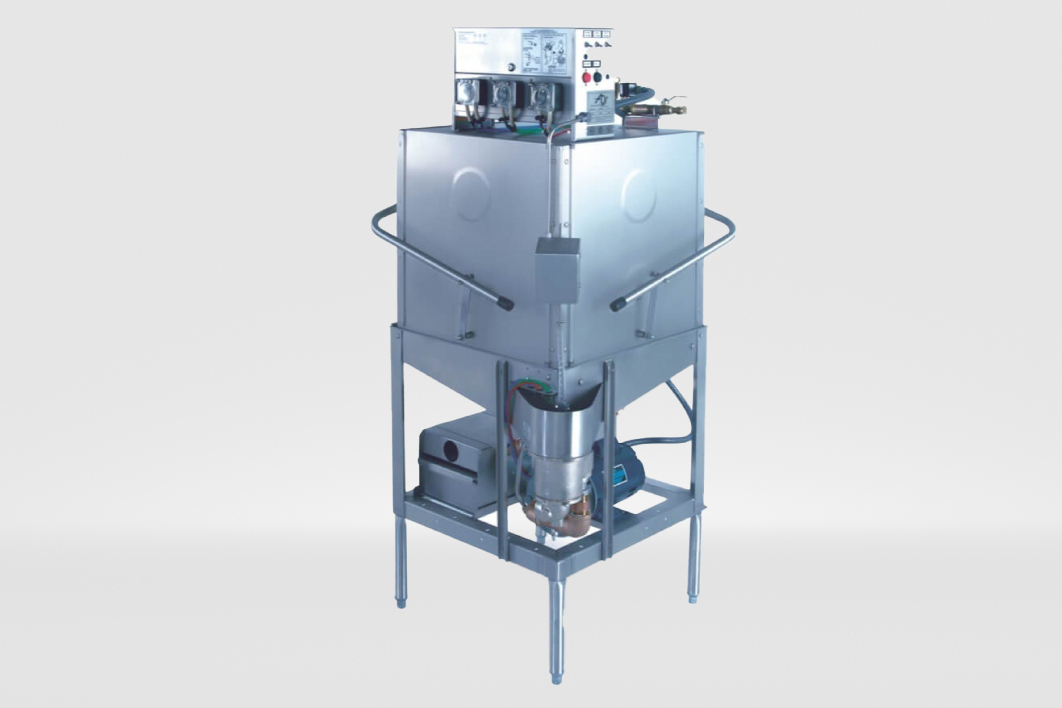
Take a mid-size restaurant replacing a door-type dishwasher. Buying a new unit outright runs about $7,500. Over a 7-year period, add roughly $4,500 in routine maintenance and deliming, plus a realistic estimate of one or two repair calls in that window, often $700 to $1,500 each depending on the part. Total cost of ownership lands somewhere around $13,500 to $15,000, not counting the time spent coordinating repairs.
A comparable lease with service included, at roughly $185 a month, runs about $15,500 over that same 7 years. On paper, buying looks cheaper. What that number doesn’t capture is the risk: the purchase estimate assumes maintenance actually happens on schedule and assumes only one or two repairs. A single major failure, a bad motor or control board, can add $1,500 or more in a single visit, and a slow week waiting on a technician costs more in lost service than the repair itself.
That’s the real tradeoff. A purchase can come out cheaper if everything goes reasonably well. A lease costs more on average but converts an unpredictable risk into a fixed monthly number, which is exactly what it’s designed to do.
Frequently Asked Questions
Can I switch from owning to leasing later?
Yes. Many operators start out owning equipment and move to a lease once they’ve felt the cost and hassle of an unexpected breakdown firsthand. There’s no rule that says the decision has to be permanent.
Does leasing cost more in the long run than buying?
Not necessarily, once maintenance, repairs, and eventual replacement are factored into the purchase side honestly. The bigger difference is usually where the financial risk sits, not the total dollar amount.
What happens at the end of a dishwasher lease?
Terms vary by provider, but most leasing programs offer the option to upgrade to a newer unit, renew the existing lease, or in some cases purchase the machine outright. Confirm the specifics before signing.
Is renting a commercial dishwasher the same as leasing one?
The two terms are often used interchangeably, but they don’t always mean the same thing. A rental usually points to a shorter, more flexible arrangement, while a lease typically runs for a fixed term with service built into the monthly rate. Whichever word a provider uses, read the agreement for the term length, what service covers, and what happens if you need to end it early.
Can you lease a high temp or a low temp dishwasher?
Yes, both are commonly available on a lease. Low temp machines sanitize with chemicals, so the lease is often paired with a detergent and sanitizer supply. High temp machines sanitize with hot water and usually need a booster heater and the right electrical service. Before you choose, confirm what your kitchen’s power and hot water supply can support.
Talk Through the Numbers for Your Kitchen
The right call depends on your capital situation, your risk tolerance, and how much you value not being the one who has to solve a breakdown at 7pm on a Friday.
American Energy Restaurant Equipment has leased and sold commercial dishwashers across Washington DC, Northern Virginia, and Maryland since 1979, with Service by Your Next Meal, Guaranteed. We can walk through both paths honestly instead of pushing you toward whichever one we happen to be selling that month.
Request a quote to compare real numbers for your kitchen, whether that ends up being a lease or a purchase.